About
AI Safety & Security · Architecturally Assured AI · Safety-Critical Systems
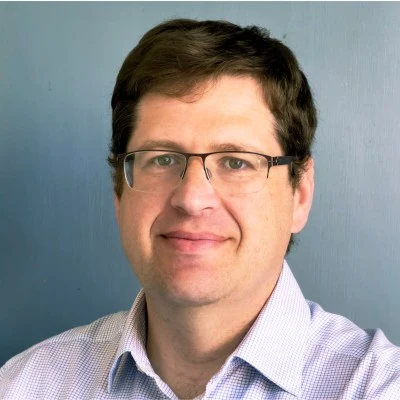
Systems architect, researcher and technology leader working on building architecturally assured AI. While running an R&D organization and creating AI strategy for large organizations, I learned through hands-on experience that there is a large gap between the safety assurances and promotions of large vendors and the real security and trust capabilities of deployed systems. Twenty years in safety-critical systems spanning counter-IED detection, formal verification, medical devices, enterprise AI and agentic security.
I founded Soundness AI in February 2026. The lab combines two workstreams. The research evaluates new AI architectures and frontier models in context of existing work on security, human-AI collaboration, and control theory to identify emerging failure modes. This directly feeds into the ongoing commercial technology development work to reduce AI risk in regulated and safety-critical environments. Earlier: Analog Devices, Maxim Integrated, Exponent, and Drexel University.
Principles
AI should automate, not decide
Every model trained on similar data produces a statistically average recommendation. If your competitors use the same AI to make the same decisions, you are all converging on the same strategy. Use AI to write code, process data, automate workflows. Do not let it replace judgment. The companies that win will be the ones disciplined enough to think for themselves. Read more
Empathy without expertise is just vibes
A professor told me early in my career: stay current with technology. You can always become less technical, but once you abandon it entirely, you become just another leader relying on sentiment. The moment you cannot follow the technical discussion, you have lost the ability to make informed decisions. I have kept my hands in the work for 20+ years because of that advice.
Incomplete guides are the only honest ones
The name is not modesty. It is a structural claim. The field moves too fast for completeness and anyone promising it is selling something. Dante had Virgil, who represented human reason, and human reason has limits. I will take you as far as I can. The rest of the journey is yours. Read more
Build systems that outlast you
The ML forecasting system I built in 2014 is still in production. Eleven years and counting. That was not an accident. It was designed for robustness, interpretability, and the assumption that I would not be there to maintain it. The same applies to organizations. I have built three from scratch. Each one operates without me. That is the point.
Safety-critical means the constraints are the product
In medical devices, the reliability requirement is not a feature. It is the entire architecture. Implantable-device-grade constraints shaped how I think about every system I build, including enterprise GenAI. Zero hallucination is not a nice-to-have when the output faces a patient, a customer, or a board.
The LLM assumes it knows what you want. It does not
You work with colleagues who share your context through training, education, and interaction. An AI model trained on the corpus of the internet has a different understanding of your task. One of the largest sources of error is the gap between what you meant and what the model inferred. Make it clarify before it executes. Read more
Innovation culture reduces shadow AI. Surveillance does not
If employees sense AI adoption is about cost reduction that might affect headcount, they protect themselves with unapproved tools. The organizations that reduce shadow AI fastest are the ones that invest in people: training, approved tools, clear guidelines, protected time to learn. Governance works when paired with enablement.
Mentorship
Mentoring is not charity. It is how I stay sharp. People more senior than me, people starting out, people in my industry and far outside it. A VP navigating a manufacturing merger and a junior PM dealing with a tech pivot are having the same conversation in different vocabulary. The variety is the point.
If you are working on a problem in AI, engineering leadership, career transitions, or navigating organizational chaos, I am happy to talk. I do not charge for mentorship. Pick someone six months behind you on a problem you just solved. Give them thirty minutes. See what you learn. If that person is you, reach out.

Contact
For commercial products or licensing, contact me on LinkedIn.