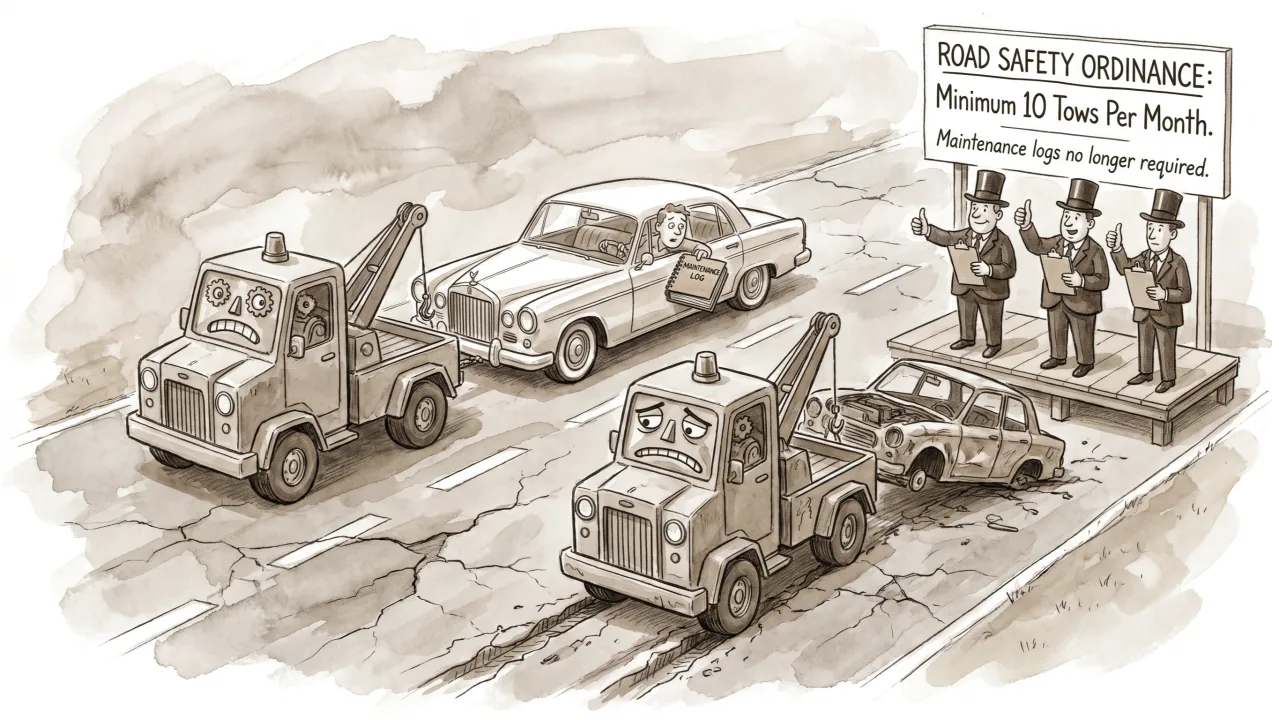
What happens when AI adoption becomes a mandate rather than a decision
One day a city started having a problem. Cars were failing on the highway, one after another, blocking traffic, causing delays. Nobody wanted to spend money on maintenance. Oil changes, tune-ups, new tires, all pushed off until later.
A man named Johnny saw a real need and answered it. He bought a tow truck. Whenever a car broke down, he hauled it to a repair shop. The car got fixed. The driver got back on the road. It worked.
The problem was income. Some days the highway was empty of breakdowns. Some days it was full. Johnny could not build a business on that kind of uncertainty, so he invented the subscription. Pay a monthly fee, get up to a certain number of tows per year. Predictable revenue. Predictable costs. It was a reasonable solution to a real problem.
Then something shifted.
Once drivers had subscriptions, they stopped maintaining their cars. Why spend money on an oil change when a tow is already paid for? Breakdowns got more frequent, and worse. Some cars had no engine. No wheels. The tow truck did not haul them so much as drag them, scraping pavement all the way to the shop.
Johnny scaled up to meet the demand. More trucks. More drivers. More capacity for the growing pile of cars that could not move on their own. He was still solving the problem in front of him.
Then came the pile-up.
Dozens of cars failed on the highway at the same time. The road was blocked for hours. The city took notice. Within months the council passed the Road Safety Ordinance: every vehicle operating in the city was required to carry active towing coverage as a condition of road access. The intention was good. Nobody wanted another pile-up.
Johnny had trucks ready.
What nobody anticipated was the scoring. To prove compliance, every towing event had to be logged and reported. The city needed data. Over time the data became a metric. The metric became a target. Those who hit their towing numbers were seen as responsible drivers. Those who fell short received a notice.
Some residents pushed back. The drivers who kept their cars in exceptional shape. People who spent weekends under the hood, never skipped a service, and knew every sound their engine made. They still called Johnny when something genuinely broke, and it worked exactly as intended. But they argued, loudly and with data, that a towing index measured movement, not health. That the cars dragging their undersides across the pavement were not evidence the system was working. The city listened politely and kept the scoring. Correctly maintained cars got towed anyway because the compliance numbers had to go up.
The subscriptions were priced for occasional breakdowns. As volume grew, the math stopped working for everyone. Johnny needed more trucks, more drivers, more fuel. The city needed to know where the money was going. Flat fees made neither possible. Per-mile billing was the answer they agreed on. Every tow logged, priced, and reported. The more you needed, the more you paid.
The highway got longer. The cars got worse. The bills got larger. Some residents stopped driving entirely, just waiting for someone to move them.
Nobody asked who was going to fix the roads.
Tow trucks are AI agents. Johnny is any vendor who built something genuinely useful. The cars are business processes. The Road Safety Ordinance is the well-intentioned mandate that turned adoption into a compliance requirement. The towing index is the adoption metric that replaced the outcome metric. The drivers who maintained their own cars are the teams that kept their processes sharp, used AI where it actually helped, and argued that volume is not the same as value. The damaged highway is the quality of work that erodes when the metric is how often you used the tool, not what the tool produced.
This is not a piece about whether AI is useful. It is about what happens when "are we using it" replaces "is it working."
Written by a 20-year veteran of the towing industry. The AI kind.