Seven months ago, I started Soundness AI as an independent research lab to understand how GenAI is changing the nature of work, and to examine everything from the economics and value proposition to how AI is actually used and embodied in modern workflows.
Early on, it became obvious that simply putting a human in the loop is not enough to create the level of trust required to scale AI into critical work. Without that trust, the bottleneck is often simply shifted back onto the human and onto human-to-human collaboration.
I have divided the research into several areas: security and privacy, incompleteness, hallucination, and deception. In the last category, I am currently preparing a framework for evaluating the causal mechanisms behind deceptive behavior in large language models.
Together, this research has produced 14 provisional patent applications covering 21 distinct research families, alongside academic papers and open-source projects. Some are directly focused on AI; others address related problems, such as secure container operations. I have also published preprints on deterministic training, efficient architectures, memory, observability, and reliable AI assistance.
Grounding the research in real systems
I have also had the good fortune of reuniting with a former colleague who invited me to serve as CIO at his startup.
That work gives me direct grounding in what it means to build a secure environment that enables the deployment of agents inside an organization while protecting it from an increasingly AI-enabled threat landscape outside. At the same time, we are building highly reliable systems intended for use across healthcare applications.
While that work is separate from my Soundness AI research, it provides a continuous stream of signals about deficiencies in the commercial systems available today—not only for startups, but also for Fortune 500 companies trying to apply AI to real work.
From research to usable systems
A much larger integrated prototype that brings together my AI trust research from the ground up is also in development.
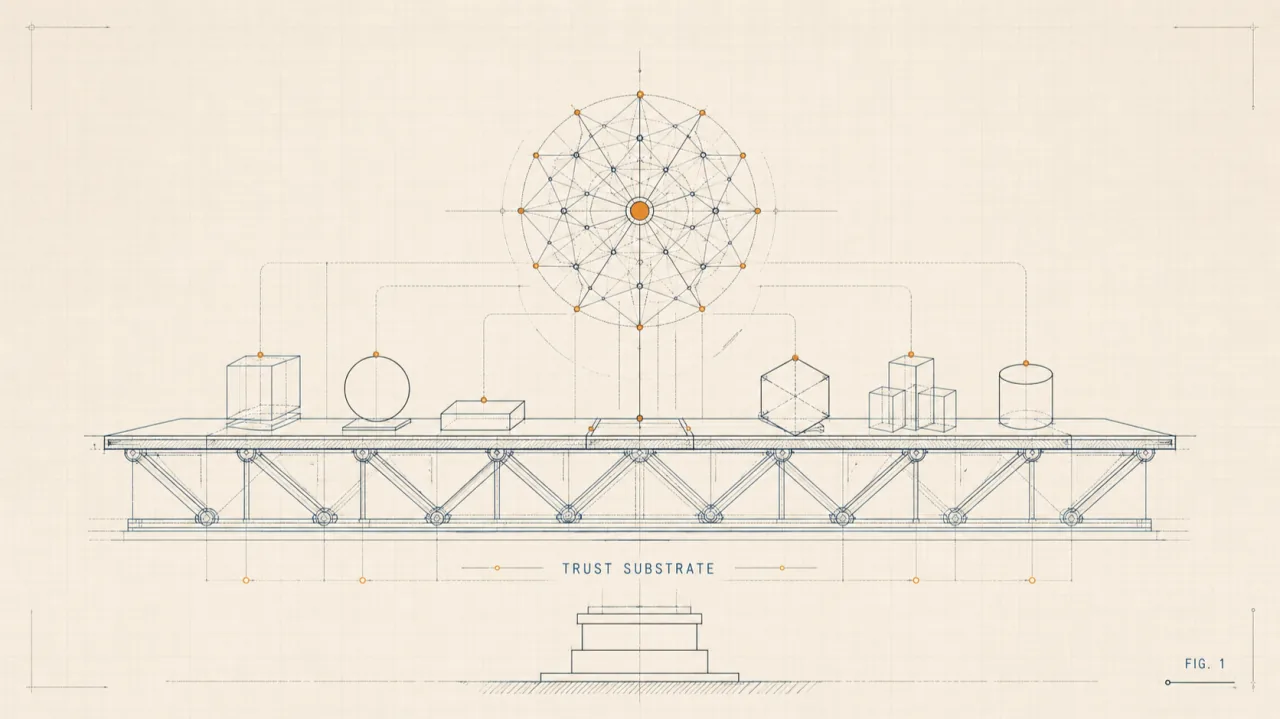
This prototype is currently my substrate for evaluating how to enforce stronger security boundaries, generate fewer hallucinations, reduce omissions, increase the traceability of AI-generated content, and treat local AI as a first-class architectural choice where independently verifiable trust matters.
The overall goal is to reduce the verification burden placed on the humans who are ultimately supposed to benefit from AI.
Writing, mentoring, and connecting communities
As part of giving back to the community, I have continued writing about AI trust, reliability, economics, agentic development, and human-AI interaction. I hope this work helps amplify our collective ability to address the opportunities created by a technology that is still in its infancy in terms of standards and patterns of use.
I have also continued mentoring companies and individuals navigating the same landscape.
And I am beginning to plan a workshop on Trust in AI and Data-Driven Companies. The goal is to bring together researchers and inventors developing new ways to make AI trustworthy with the people responsible for making these systems actually work inside businesses.
If you are interested in participating, please contact me.
Seven months checklist
Seven months in, the central idea behind Soundness AI has become even simpler:
AI does not need to be infallible to be useful. But we need systems that remain trustworthy even when AI fails.
For details, see yakovshkolnikov.com:
- 7 research and working papers
- 14 provisional patent applications covering 21 invention families
- 30+ articles and essays on AI, trust, reliability, economics, and the nature of work
- Research spanning security, privacy, incompleteness, hallucination, and deception
- Continued open-source research and tooling
- A large integrated trust-focused prototype in development
- Continued mentoring of companies and individuals
- Planning a Trust in AI and Data-Driven Companies workshop
Disclosure: this text was lightly edited with AI